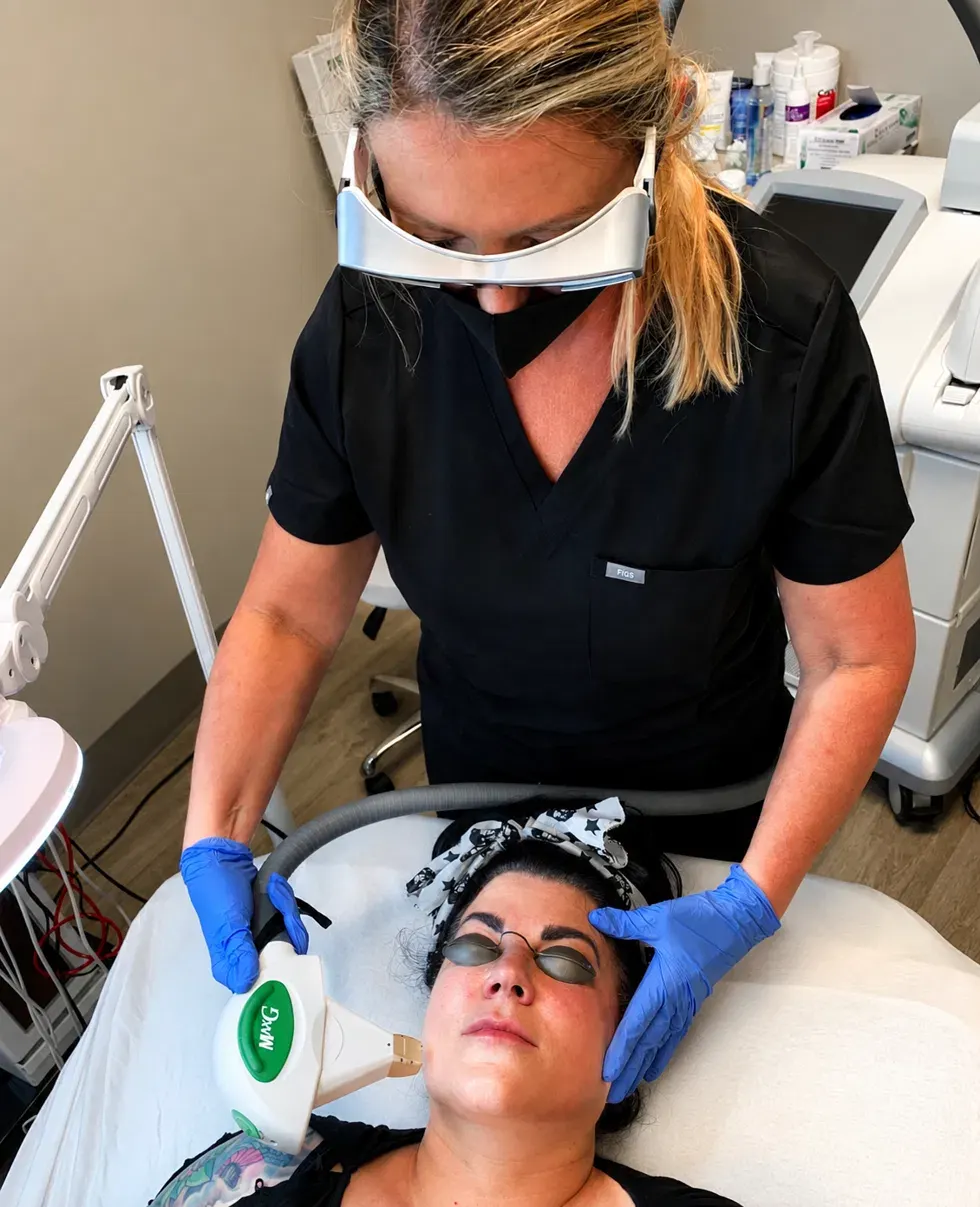
Essential Aesthetics and Laser offers laser skin resurfacing in Charlotte, NC on the Alma Hybrid, which pairs CO2 ablative and non-ablative laser energy. The CO2 side removes a thin layer of worn skin, while the non-ablative side heats below the surface. The mix and strength are set at a complimentary consult, so healing runs from a few days to about a week.
The device · Alma Lasers
Alma Hybrid
The Alma Hybrid pairs CO2 ablative and non-ablative laser energy in one applicator. Alma says it can lase CO2 and 1570 nm separately or in various modes, so depth is set for each person.
What laser skin resurfacing treats
Laser skin resurfacing does the most for surface problems: fine lines, sun damage, blotchy color and many types of acne scar. Sun wrinkles around the eyes and lips respond well. Problems that sit deeper change less.
- Deep folds and creases look softer afterward, yet they stay visible.
- Very deep scars get better but do not vanish, and narrow ice-pick scars usually call for combined treatments.
- Advanced sagging needs a facelift. When skin is only a little loose, laser skin tightening on the Harmony XL PRO is the closer match.
How the Alma Hybrid works
The Alma Hybrid holds two lasers in one applicator: a CO2 laser, which is ablative, and a 1570 nm laser, which is non-ablative. Ablative means the laser takes off the thin top layer of skin. Non-ablative means it warms the tissue below while the surface stays intact.
Alma describes the device as a fractional laser treatment. A fractional laser works in a grid of tiny treated columns, and the normal skin left around each column speeds healing. The maker says the applicator can fire CO2 and 1570 nm "separately or in various modes."
That choice is what makes each treatment adjustable. Settings such as how deep the laser reaches are set for your skin, so one plan stays gentle while another goes deeper on scars or a bumpy texture. Resurfacing sits alongside the other laser treatments at the clinic, and the consult decides which one fits your concern.
Fractional CO2 vs non-ablative laser
Depth decides both how much your skin changes and how long you need to heal.
| Laser type | What happens to the surface | Healing time | Visits |
|---|---|---|---|
| Fractional CO2 | Tiny columns come off; skin between them stays | About one week | Planned per person |
| Non-ablative fractional | The surface stays; heat works below it | Redness and mild swelling for 2 to 3 days | A series, about 3 to 5 for one type |
Other resurfacing lasers exist, such as erbium, but they are not part of the Alma Hybrid, which uses only its CO2 and 1570 nm lasers.
How many resurfacing sessions you need
No standard count exists for CO2 resurfacing. A fractional CO2 laser treatment for acne scars has its number of sessions, spacing and settings planned for each person. Gentler non-ablative passes are booked as a series; one type needs about 3 to 5 visits, each making a smaller change.
Give each session time before you decide on another. Collagen keeps building well after a CO2 treatment, and the skin can keep getting better for as long as a year.
Recovery and downtime after resurfacing
Recovery tracks depth. After a gentle non-ablative pass, expect redness and mild swelling for 2 to 3 days. After fractional CO2, plan on about a week to heal. Stronger settings stretch every stage, and smoking slows healing.
Healed skin keeps a pink tone for a while. Swelling, crusts, cleaning and what is normal on each day are covered in laser resurfacing recovery day by day. While you heal, call the clinic with questions during opening hours. Outside clinic hours, contact your own doctor or urgent care; call 911 for an emergency.